


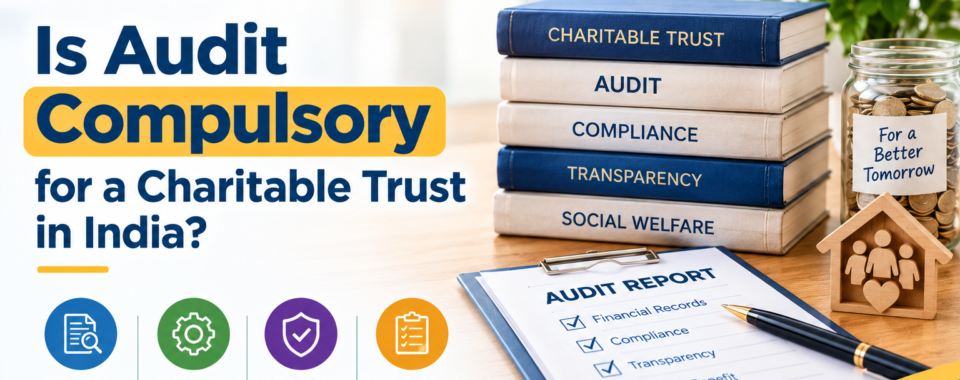
Trustees look after donations, expenses and funds, and they’re expected to do it openly. So the question comes up a lot: is audit compulsory for a charitable trust in India? It depends on the trust’s income, its legal status and the tax rules that apply to it.
A proper audit shows that money was spent on the purpose it was given for. It also keeps the trust’s records accurate and helps trustees meet the requirements of the Income Tax Act, 1961.
Is Audit Compulsory for a Charitable Trust?
Often, yes. Under the income tax provisions, a charitable trust may have to get its accounts audited. This mostly concerns trusts and institutions that claim exemption under Sections 11 and 12. For them, an audit is generally needed once total income, worked out before applying the exemption provisions, goes past the maximum amount not chargeable to income tax for that year.
The trust has to get an audit report in the prescribed form and file it by the deadline. On top of that, other laws, the trust deed or state-specific rules can add their own audit requirements.
Because obligations differ from one trust to another, depending on structure and activities, trustees should talk to a qualified professional about their own charitable trust audit requirements.
Why a Charitable Trust Audit Matters
An audit is more than a legal box to tick. It lets trustees show that donations and other funds are handled responsibly.
It can help you:
- Verify income, donations, expenses and financial records
- Check that funds go toward the trust’s charitable objectives
- Spot accounting errors and gaps in documentation
- Stay compliant with tax laws and reporting rules
- Build trust with donors, beneficiaries and regulators
If you keep clear records through the year, the audit goes much more smoothly, and there’s less chance of mistakes in the last-minute rush.
Documents Needed for a Charitable Trust Audit
Get your records and supporting papers updated before the audit starts. These usually include the trust deed, PAN details, bank statements, donation receipts, expense bills, books of accounts and details of investments.
Depending on what your trust does, you may also need records on grants, property, employee payments and charitable activities. The auditor can ask for more documents to verify transactions and check compliance.
What If a Trust Doesn’t Complete Its Audit?
Skipping an audit that applies to you can lead to tax and compliance trouble. Depending on the situation, it may affect the trust’s exemption claims, its filing obligations or other legal requirements.
Don’t assume a small trust is automatically exempt. Look at the trust’s income, its registration status and the laws that apply before you decide an audit isn’t needed.
A professional offering charitable trust audit services can help trustees understand their obligations, prepare financial statements and file the required reports on time.
How Professional Trust Audit Services Can Help
Trust audit services in Mumbai can support charitable organisations in checking financial records, reviewing expenses and donations, preparing audit reports and understanding the compliance requirements that apply.
A qualified auditor can also flag missing documents and explain what needs attention before you file. An experienced professional lets trustees handle their responsibilities with more confidence and keep their financial practices transparent.
In short, review your audit obligations every financial year. Learning the rules early avoids needless delays and supports the trust’s credibility over the long run.
Frequently Asked Questions
1. Is audit compulsory for every charitable trust in India?
No. It depends on the income tax provisions, the trust’s income and other relevant laws.
2. When is an audit required for a charitable trust?
Generally when the income threshold and other conditions under the applicable law are met.
3. Which law governs charitable trust audits in India?
The Income Tax Act, 1961, along with any state or trust-specific laws that apply.
4. What documents are needed for a charitable trust audit?
Commonly bank statements, donation receipts, expense bills, books of accounts and the trust deed.
5. Can a charitable trust hire a professional auditor?
Yes. A trust can engage a qualified professional to review its accounts and meet audit and compliance requirements.