






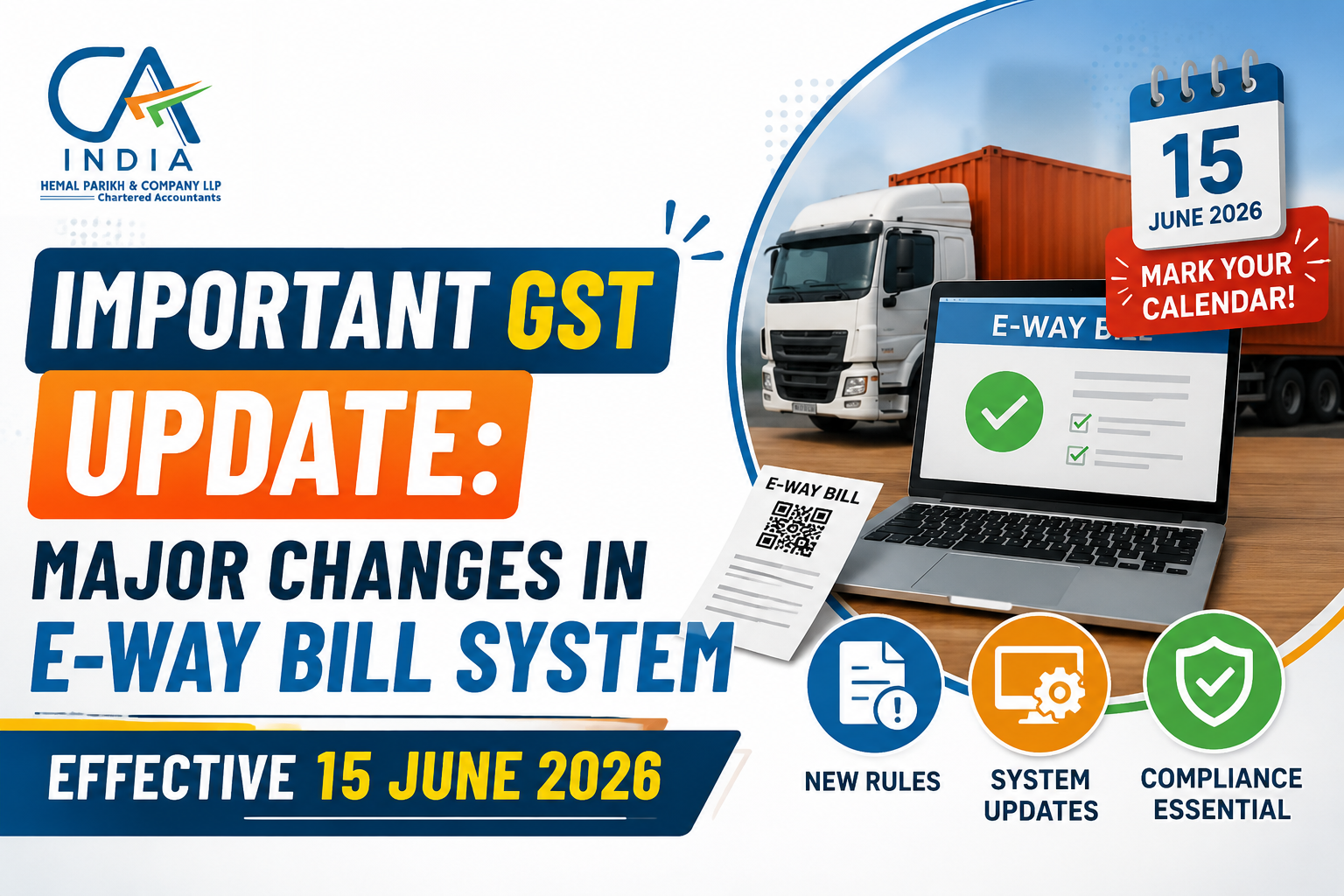
GSTN Introduces New E-Way Bill Compliance Requirements
The Goods and Services Tax Network (GSTN) has announced important changes to the E-Way Bill system, which will come into effect from 15 June 2026. These updates are designed to improve transparency, strengthen compliance, and enhance the tracking of goods movement across India.
Businesses involved in the transportation of goods should understand these changes and ensure their processes are updated accordingly.
1.Mandatory “Ship To GSTIN” in Bill-To/Ship-To Transactions
One of the most significant changes is the mandatory requirement to provide the actual consignee’s GSTIN (Ship-To GSTIN) while generating an E-Way Bill in Bill To/Ship-To transactions.
What Does This Mean?
In many business transactions, the invoice is raised on one party (Bill To), while the goods are delivered directly to another party (Ship To).
Under the new rule:
- The GSTIN of the actual consignee receiving the goods must be mentioned in the E-Way Bill.
- If the consignee is unregistered, taxpayers must enter URP (Unregistered Person) in the Ship-To GSTIN field.
Example
Supplier: ABC Pvt. Ltd., Mumbai
Buyer (Bill To): XYZ Ltd., Pune
Consignee (Ship To): PQR Ltd., Nashik
ABC Pvt. Ltd. raises the invoice to XYZ Ltd. but ships the goods directly to PQR Ltd.
Earlier, many taxpayers entered only the buyer’s GST details while generating the E-Way Bill.
From 15 June 2026 onwards, the GSTIN of PQR Ltd. (actual consignee) must be mentioned in the Ship-To GSTIN field.
Benefits
- Improved traceability of goods movement
- Better compliance monitoring
- Reduced discrepancies during GST audits
- Enhanced transparency in supply chain transactions
2. Introduction of E-Way Bill Closure Facility
GSTN has also introduced a new E-Way Bill Closure Facility, allowing stakeholders to voluntarily close an E-Way Bill after successful delivery of goods.
Who Can Close an E-Way Bill?
The closure can be performed by:
- Supplier
- Recipient
- Transporter
- Driver (through OTP verification)
- Authorized Person
Benefits of E-Way Bill Closure
- Confirmation of successful delivery
- Better logistics documentation
- Reduced disputes between parties
- Improved compliance tracking
- Greater transparency in supply chain operations
What Businesses Should Do
To ensure smooth compliance with the new requirements, businesses should:
- Review existing E-Way Bill generation processes.
- Train GST and logistics teams on the new Ship-To GSTIN requirement.
- Verify consignee GST details before dispatch.
- Implement internal procedures for E-Way Bill closure after delivery.
- Coordinate with transporters and authorized personnel regarding the new facility.
Conclusion
The latest GSTN updates represent a significant step toward creating a more transparent and accountable logistics ecosystem. By mandating Ship-To GSTIN details and introducing the E-Way Bill Closure Facility, the government aims to improve tracking, reduce compliance gaps, and streamline the movement of goods across India.
Businesses should proactively update their systems and processes before 15 June 2026 to ensure seamless compliance and avoid potential operational challenges.